
The history of biology traces the living world from ancient to modern times. Biological sciences such as Botany and Zoology became increasingly professional scientific disciplines from the beginning of the 18th century. With a better understanding of life forms and the fading of boundaries with technology that helped delve into the depth of molecular biology, today, these studies have become more focused and purposeful for application, benefiting mankind. Thus, Biotechnology and Microbiology are realized for their importance in the present times rooting from the basics of life forms such as plants, animals and microorganisms.
The Department of Biotechnology, National College (Autonomous), Tiruchirapalli, was established in 2011 with a firm objective to provide quality teaching and learning in the fields of modern science, focused on practical learning, leading to original research contributions of global standards. As proof of growth, the Department of Microbiology was initiated in the year 2013 to impart knowledge on the beneficial and malevolence impacts of microorganisms on society and later merged with the Department of Biotechnology. After a decade, today, the department offers UG and PG courses are offered in both disciplines, possesses the best possible infrastructure to nurture 250 students and hosting 14 faculty members.
The Department of Biotechnology and Microbiology in National College stands tall in reputation in terms of quality education, updated training and career guidance as it is recognized under DBT PG teaching & under the DBT star college scheme. The PG research and teaching departments have thus opened up lead research avenues for post-graduate and doctoral students in molecular oncology, genetic engineering, animal health, bioinformatics, data mining, plant and animal biotechnology, marine microbiology, freshwater microbiology, plant microbiology, and integrated research areas. The department has signed MoUs with the National Research Center for Banana (NRCB), Tiruchirappalli, Alagappa University, Karaikudi, Tamil Nadu, Kothari Sugars and Chemicals Limited, Tiruchirappalli, Tamil Nadu, Targenix private limited (Chennai), Fermentech GSV (Thanjavur), and Vivagen Lab Dx (Chennai), to impart and exchange academic and research outputs and training.
The Biotechnology and Microbiology department thus provides state-of-the-art facilities for studies about plant tissue culture, animal cell/tissue culture, microbiological research, toxicology, cancer biology, aquaculture, metagenomics, and stem cells. Both the UG and PG students are given supervised access to the departmental labs 24x7 and are strongly encouraged to practice science. The National College Culture Collection Centre (N4C) was initiated in January 2022, which holds more than 220 microbial strains currently and are screened for various application potentials such as lipases and amylases, nano-particle synthesis, probiotic, and dye degradation activities.To add wings to its research vision, the department in the academic year 2020-2021 has attracted five additional faculty members with research and teaching expertise with International post-doctoral research experience in molecular oncology, neurotoxicology, animal health science, aquaculture, bioinformatics, agricultural/soil microbiology, aquatic biotechnology / biofuel and metabolic engineering.
Biotechnology and Microbiology are closely inter-related to each other in terms of the fundamentals and applications. Biotechnology includes many or most of the concepts and different laboratory techniques of Microbiology and similarly, Microbiology completely depends on the biotechnological methods. There are both common and uncommon areas of study and employment for Biotechnology and Microbiology in general. For an instance, common areas for Biotechnology and Microbiology include that of Fermentation, Bioinformatics, Molecular Biology, Diagnostics etc. while the two disciplines largely stay apart or differ in the aspects of Animal / Plant Biotechnology and its application areas such as Assisted Reproductive Technology (ART / IVF), Cell Culture based productions etc.
National College offers the best and practical exposure to the students both in Biotechnology and Microbiology in the common inter-twined facilities that are highly resourceful and vast. Be it, short term projects or internships or research collaborations, or advanced instrumentation, students of Biotechnology and Microbiology are given equal exposure and importance across disciplines in all the activities, building their confidence in curricular and extra-curricular activities. Team of faculty members with Post-Doctoral experience in India and Abroad having different research background / specializations in the fields of Biotechnology and Microbiology in the department at NCT, give the students winning edge in understanding the subjects and practical learning; leading to remarkable exposure favouring higher studies and placements.
Biotechnology as a Degree Programme @ National College Success of any educational / Degree programme lies on the plight of placement of students in various avenues of the field of interest. Biotechnology is nowhere less when it comes to placement of its students. In-fact, there is a huge demand of ‘trained’ biotechnologists in Research and Industrial sector. To meet the needs for quality biotechnologists and skilled personnel, National College (Autonomous), Tiruchirappalli, launched M.Sc., Biotechnology programme from the academic year 2011 – 2012.
To offer quality Higher Education to the younger generations, especially from rural India, who are economically and socially backward, to liberate themselves from prejudice, oppression and ignorance and to gain knowledge for their bright future.
A Pass in Higher Secondary Examination conducted by State or Central Board of Secondary Education or equivalent examination with Physics, Chemistry and Mathematics (or) Biology / Botany / Zoology as the subjects of study and with a minimum of 50% overall aggregate of marks.
Apply here for admission @ NCT through GAT-B: - Click here
Programme under DBT-PG Teaching Scheme: M.Sc. Biotechnology
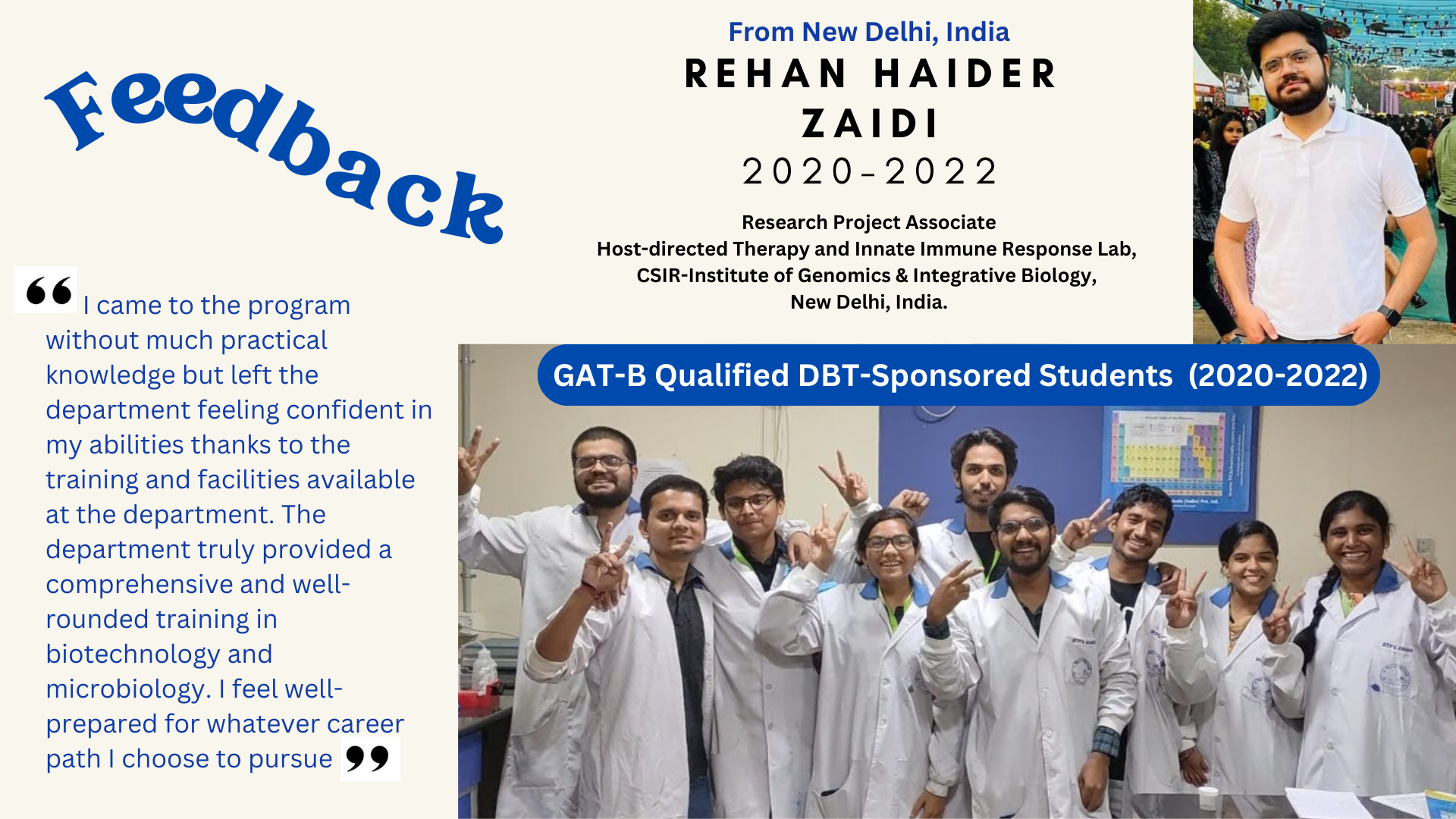
Applications are invited from the GAT-B qualified candidates to apply for the MSc Biotechnology Programme under the DBT-PG Teaching Scheme.
No. of seats under the DBT-supported MSc Biotechnology Programme: 10
| Name of the Institution | Name of Programme | Coordinator Details | No. of DBT-Supported Seats | ||||||
|---|---|---|---|---|---|---|---|---|---|
| Total | UR | OBC | SC | ST | EWS | DA | |||
| National College (Autonomous) Tiruchirapalli, Tamil Nadu |
MSc Biotechnology | Dr. V. Miriam Sheba Associate Professor and Head, PG & Research Department of Biotechnology & Microbiology miriamsheba@nct.ac.in +91 9884726278, +91 9003671011 |
10 | 4 | 3 | 1 | 1 | 1 | Filled horizontally across all categories |
Pass in the Bachelor Degree (with at least 55% marks) in any branch of life sciences (Biotechnology, Microbiology, Zoology, Botany, Biochemistry, Agricultural Sciences) or equivalent from any recognized University of National and International repute. Students with Bachelor Degree in B.Tech., Biotechnology, Agriculture / MBBS or the equivalent, are also eligible.
15-06-2026 (June 15)
17-07-2026 (July 17)
31-07-2026 (July 31)
14-08-2026 (August 14)
31-08-2026 (August 31)
03-09-2026 (September 3)
*Candidates seeking transfers must withdraw admission formally from NCT, before getting admitted in another centre.
Results of Graduate Aptitude Test-Biotechnology (GAT-B) 2026 are displayed on the website of Department of Biotechnology & Regional Centre for Biotechnology Click here & Click here for access to participating universities/institutions and candidates.
1.Following declaration of results of Graduate Aptitude Test-Biotechnology (GAT-B) 2026, candidates will download GAT-B 2026 Score and Rank card from the link provided on the website of National Testing Agency (NTA) Click here The GAT-B 2026 Score and Rank Card can be downloaded only from NTA website and from no other website.
2.RCB has displayed details of participating universities/institutions, DBT supported PG Programmes, sanctioned seats and respective eligibility criteria of universities/institutions on the website Click here . For detailed information regarding admissions at participating universities/institutions, candidates may visit the website of the respective universities/institutions they wish to apply. Candidates shall fill the application form of individual universities/institutions as per institutional admission and selection norms.
3. Following display of admission list by participating universities/institutions, candidates may contact respective DBT PG Program Coordinator regarding admissions related formalities and queries.
4.GAT-B 2026 Score and Rank Card is valid for admission in academic year 2026-27 only. Issuance of GAT-B 2026 Score and Rank Card does not guarantee admission to DBT supported Post Graduate (DBT PG) Programmes in Biotechnology at participating universities/institutions. Confirmation of admission to DBT supported Post Graduate (DBT PG) Programmes in Biotechnology, in academic session 2026- 28, is subject to candidate’s fulfillment of requisite eligibility criteria of respective participating universities/institutions. Department of Biotechnology (DBT), GoI and Regional Centre for Biotechnology (RCB) do not play any role and responsibility in the admission and selection process of universities / institutions, following declaration of merit list of GAT-B 2026.
(On DBT Supported MSc Biotechnology page)
Semester Fee for MSc Biotechnology Program for GAT-B Qualified Students (2026-2028)
| S.No | Semester | Course Fee | University Fee | Exam Fee* | Total Fee |
|---|---|---|---|---|---|
| 1 | Semester-1 | 6,000.00 | 1,850.00 | 2,450.00 | 10,300.00 |
| 2 | Semester-2 | 6,000.00 | - | 2,450.00 | 8,450.00 |
| 3 | Semester-3 | 6,000.00 | 25 | 2,950.00 | 8,975.00 |
| 4 | Semester-4 | 6,375.00 | - | 1900 | 8,275.00 |
| Total | 36,000.00 | ||||
| *Includes Exam fee (Theory+Practical), Exam Application & Mark Statement in INR | |||||

Asst. Prof & Head

Asst. Prof.

Asst. Prof.

Asst. Prof.

Asst. Prof.

Asst. Prof.

Asso. Prof.

Asst. Prof.

Asst. Prof.

Asst. Prof.
Department of Biotechnology, Microbiology, and Bioinformatics National College, Tiruchirapalli
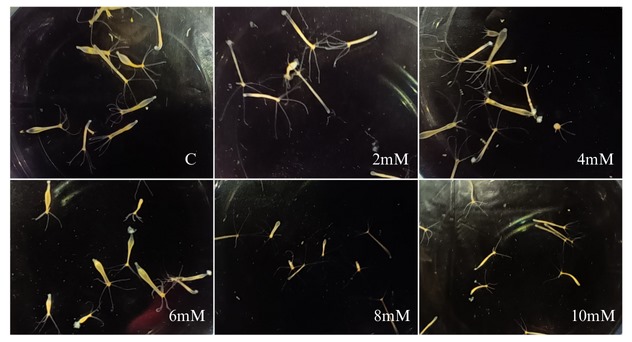
Welcome to the Hydra Research Facility at the Department of Biotechnology, Microbiology, and Bioinformatics, National College, Tiruchirapalli. Our facility is dedicated to advancing biological research using Hydra, a unique and versatile model organism. Established on October 18, 2024, this facility aims to provide researchers and students with cutting-edge resources to explore the potential of Hydra in ecotoxicology and other biological studies.
Hydra, a freshwater organism belonging to the phylum Cnidaria, has emerged as a powerful model organism in scientific research. Its remarkable biological characteristics, such as high regenerative capacity, simple body plan, and sensitivity to environmental changes, make it an ideal candidate for:
By using Hydra, researchers can gain insights into fundamental biological processes and contribute to solving real-world environmental challenges.
Our Hydra Research Facility is equipped with state-of-the-art infrastructure to support the cultivation, maintenance, and experimental use of Hydra. Key features include:
Our Hydra Research Facility is designed to attract scholars, researchers, and students who are passionate about biological research. We offer:
We invite researchers, students, and academicians to explore the possibilities of Hydra-based research at our facility. Whether you are new to Hydra studies or an experienced researcher, our team is here to support your scientific journey.
Reach out to us
to learn how to maintain Hydra and design studies using this model.
Prof. K. Varuna / Prof. S. Crosswin,
Assistant Professors and Co-ordinators of the Hydra Research Facility are available to assist you.
Contact at
varunak@nct.ac.in / crosswins@nct.ac.in
for more details on internships, projects, and collaborations.
Established in 2012, the Animal Cell Culture Facility at the Department of Biotechnology, Microbiology, and Bioinformatics, National College, Tiruchirapalli, is a state-of-the-art facility designed to support teaching, training, and research in mammalian and fish cell lines. The facility is equipped with a Class 1000 cleanroom, ensuring a sterile environment for cell culture work. It serves as a hub for advanced research in cancer biology, gene expression studies, and in vitro toxicity testing.
The facility is well-equipped with cutting-edge instruments, including:
The facility is actively involved in internship training, workshops, and project guidance for undergraduate (UG) and postgraduate (PG) students. It also offers consultancy services for cytotoxicity testing, mammalian cell culture studies, and gene expression analysis.
The facility maintains a diverse collection of cell lines for research purposes. Below is a list of available cell lines:
| S.No. | Designation | Name of the Cell Line | Origin | Organ | Cell Type |
|---|---|---|---|---|---|
| 1 | A549 | Adenocarcinomic human alveolar basal epithelial cells | Human | Lung | Epithelial |
| 2 | HepG2 | Hepatocellular carcinoma G2 | Human | Liver | Epithelial |
| 3 | MCF-7 | Michigan Cancer Foundation-7 | Human | Breast | Epithelial |
| 4 | HCT-116 | Human Colon Cancer | Human | Colon | Epithelial |
| 5 | HEK-293 | Human Embryonic Kidney | Human | Kidney | Epithelial |
| 6 | MDA-MB-231 | M D Anderson - Metastatic Breast - 231 | Human | Breast | Epithelial |
| 7 | MDA-MB-468 | M D Anderson - Metastatic Breast - 468 | Human | Breast | Epithelial |
| 8 | 3T3 | 3-Day Transfer | Mouse | Embryonic Cell | Fibroblast |
| 9 | MG-63 | Human Bone - Osteosarcoma | Human | Bone | Fibroblast |
| 10 | HUVEC | Human Umbilical Vein Endothelial Cell | Human | Umbilical Cord | Endothelial |
| 11 | HT-29 | Human Colon Adenocarcinoma | Human | Colorectal | Epithelial |
| 12 | U87 | Uppsala 87 Malignant Glioma | Human | Brain - Glioblastoma | Epithelial |
| 13 | VERO | Verda Reno | Monkey | Kidney | Epithelial |
| 14 | 2A | Neuro-2a | Mouse | Brain - Neuroblastoma | - |
In addition to mammalian cell lines, the facility specializes in fish cell culture, particularly from Zebrafish (Danio rerio). Zebrafish is a model organism widely used in developmental biology, toxicology, and genetics. The facility maintains cell lines derived from Zebrafish fins and gills, which are used for:
These cell lines are ideal for studying the effects of environmental pollutants, pharmaceuticals, and synthetic compounds on aquatic organisms.
The facility offers consultancy services for academic institutions, research organizations, and industries. Services include:
The facility provides hands-on training and workshops for UG and PG students in biotechnology and related fields. These programs are designed to enhance practical skills and career prospects in cell culture techniques, molecular biology, and cancer research.
Group Training
We offer group training programs for entire classes of UG and PG students. These sessions are tailored to provide comprehensive exposure to cell culture techniques, instrumentation, and research methodologies.
The facility actively collaborates with researchers from diverse fields, including chemistry and physics, to test the in vitro applications of synthetic compounds. Collaborative projects are encouraged to explore the biological effects of novel compounds, nanomaterials, and other synthetic materials.
For further details on training, internships, consultancy services, or collaborative research, please contact:
Dr. V. Miriam Sheba
Associate Professor and Head
Department of Biotechnology, Microbiology, and Bioinformatics
National College (Autonomous), Tiruchirapalli
Mobile: +91 9884726278
Email: miriamsheba@nct.ac
The Department of Biotechnology and Microbiology at National College offers exciting internship opportunities to both undergraduate and postgraduate students in life sciences and related fields.
The department provides students with hands-on training in a variety of specialized areas such as
These internships provide students with the hands-on experience, opportunity to gain practical experience in their respective fields, enhance their skills, and develop a deeper understanding of the industry. Students are supervised by experienced faculty members and have access to state-of-the-art facilities throughout their internship. The department is committed to providing students with quality training that prepares them for successful careers in biotechnology and microbiology.
Internships are offered as full-time engagement for 2 weeks, 1 month, 2 months and 3 months.
The Department of Biotechnology and Microbiology at National College invites applications from eligible postgraduate students for Project Studentships. As part of the project studentship, students can choose a mentor or supervisor from the department to work on their postgraduate projects. The department encourages and supports research projects in various areas such as Microbiology, Marine Microbiology, Animal Model studies, Invitro Toxicology, Cancer Biology, Molecular Biology, Epigenetics, Bioprocess Technology, Bioremediation, Plant Tissue Culture, and more. This is an excellent opportunity for postgraduate students to gain valuable research experience and work closely with experienced mentors to develop their skills and knowledge. Interested students are encouraged to apply and explore the exciting research opportunities available at the Department of Biotechnology and Microbiology.
Project positions are available based on the availability of the mentors in the department. Kindly go through the faculty profile and their specializations/publications. Your may choose to do projects starting from 2 months and upto one year. Part-time project students are also welcome to attend to the lab requirements in the evenings and weekends if the students prefers and available accordingly.
The Department of Biotechnology and Microbiology has signed MoU’s with many academic and industrial organizations of National and International repute. The list is not limited to:
| S.No. | MoU Signed with institute/industries | Date of MoU Signing | Activities undertaken |
|---|---|---|---|
| 1 | ICAR-National Research Centre for Banana, Tiruchirappalli | 26.04.2021 | BSc / MSc Biotechnology/Microbiology Industrial visit and Training Program for Tissue Culture and Banana cultivation and Post Harvesting Technology |
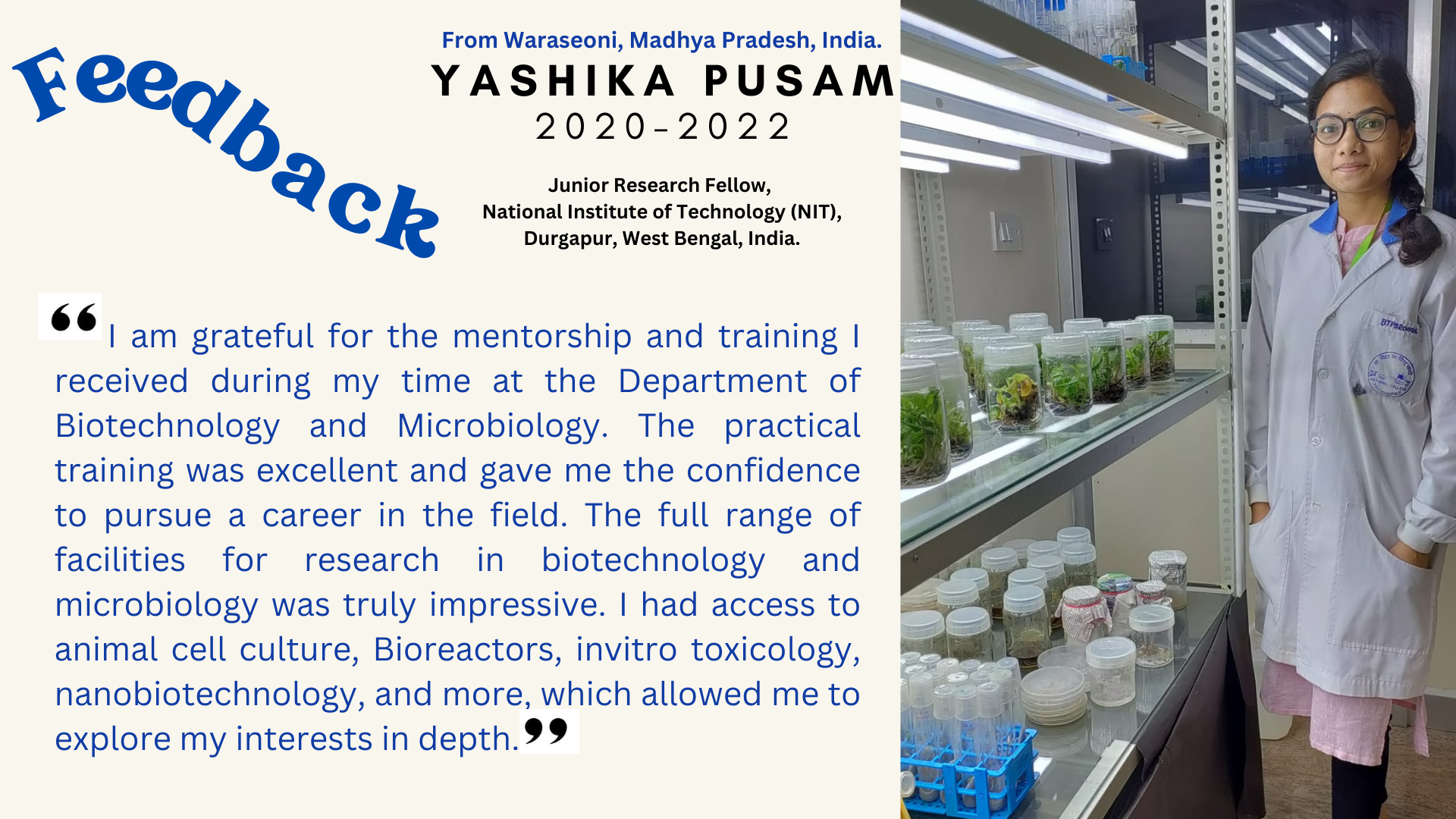
| 2 | Department of Animal Health And Management, Alagappa University, Karaikudi | 26.04.2021 | Ms. Yashika, Ms. Akshaya II MSc Biotechnology (2022) Worked for their PG Project in collaboration with the Dept |
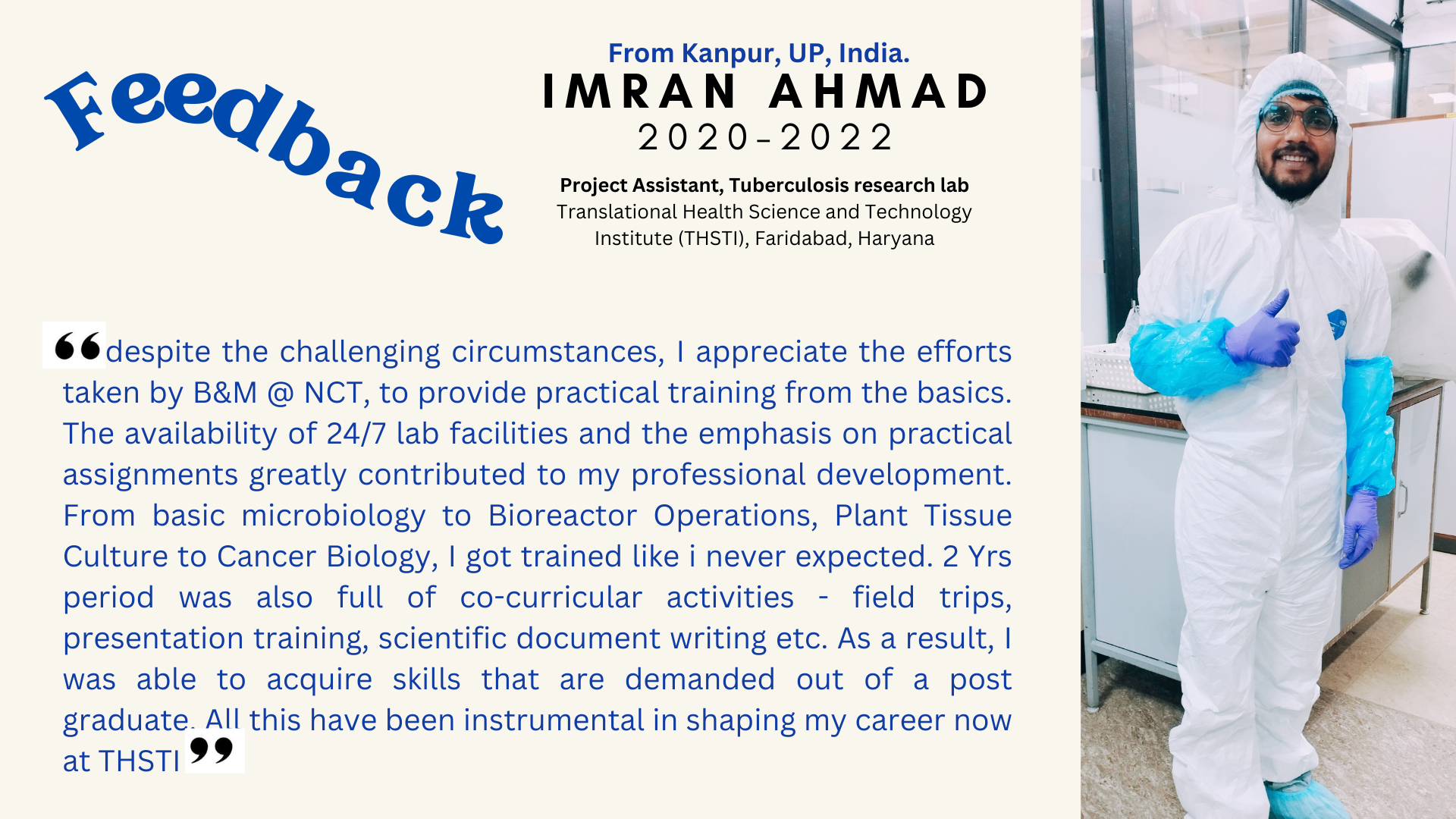
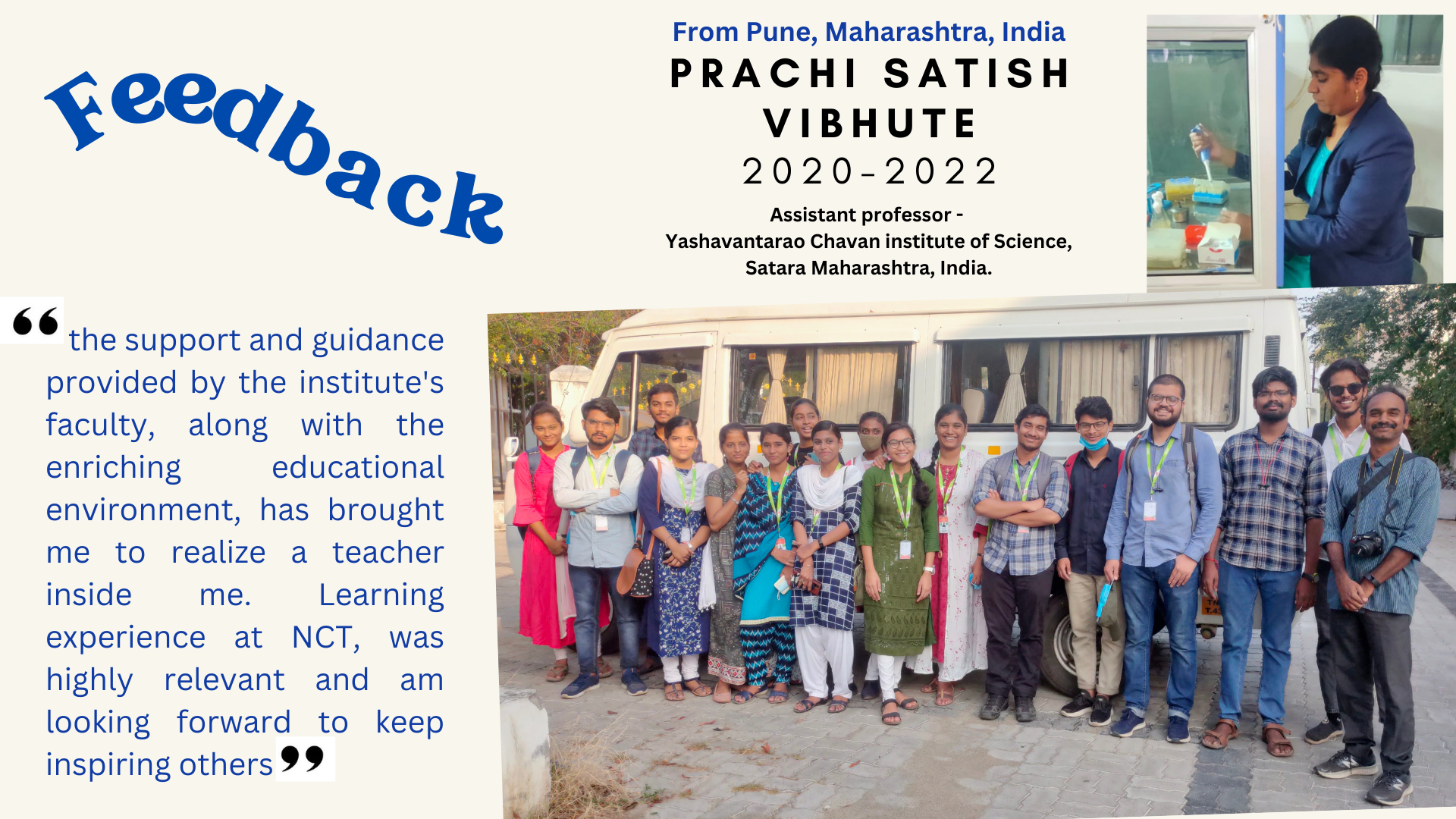
| 3 | Kothari sugars and Chemicals Limited, Tiruchirappalli | 29.04.2021 | Mr. Imran Ahmed and Ms. Prachi, II MSc Biotechnology(2021-22) carried out their collaborative project (of Kothari Sugars) at IIT, Chennai. UG/PG students were taken for Industrial Visits |
| 4 | Targenix Private Limited, Chennai | 09.07.2021 | Internship Training was organized at Targenix.Mr. Karthik, Mr. Balaji, Mr. Abraham, III BSc Microbiology Internship. |
| 5 | Vivagendx Labs, Velachery, Chennai | 05.10.2021 | Internship training and Invited Talk were organized |
| 6 | Experteze | 27.12.2021 | Three of our MSc Biotechnology students Mr. Basha, Ms. Vidhya and Ms. Nithya were sanctioned (online) with projects and awaiting funding |
| 7 | Fermentech GSV Private Limited, Thanjavur | 28.12.2021 | Industrial visit to the Industry was organized.Mr. Tamil and Mr. Ashok Sankar, II MSc Biotechnology were engaged for Internship training and executing PG Project. |
| 8 | Aarupadai Veedu Medical College, Vinayaka Missions Research Foundation- Deemed to be University, Puducherry. | 10.11.2022 | Dr. G. Rohini, Associate Professor, Dept. of Biotechnology, & Microbiology, National College (Autonomous), Trichy, collaborates for research with the Institute |
| 9 | Dhanajeevam Lifesciences, Coimbatore | 18.11.2022 | Internship Training for students in Plant Tissue Culture Techniques |
| 10 | Global Nature Foundation, Thuraiyur | 01.12.2022 | Field Visits and Eco Tour to Naveen’s Garden. |
| 11 | Trichy SRM Institute of Medical Sciences and Research Centre | 03.02.2023 | Research Collaboration |
| 12 | Prabhu Diabetes Multi-Speciality Centre | 06.04.2023 | Research Collaboration |
The Department has excellent facilities for teaching and research in Modern Biology and Biotechnology, namely, Animal Cell Culture, Plant Tissue Culture, Fermentation technology, Microbiology, Immunology, Environmental Biotechnology, Bioinformatics and Genetic Engineering.
The department houses every facility for the teaching and learning of Biotechnology from PG level up to research level with an exclusive National College Instrumentation Facility (NCIF) which is equipped with Scanning Electron Microscope (SEM), High Performance Liquid Chromatography (HPLC), Atomic Absorption Spectroscopy (AAS), Gas Chromatography-Mass Spectrophotometer (GC-MS), FT-Infra Red Spectrophotometer and Fluorescent Spectrophotometer.
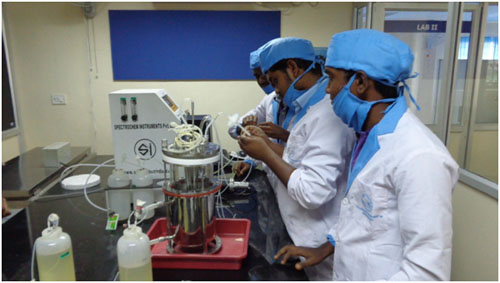 Besides, the faculty engage actively in research and are in process of equipping the Laboratory further through research grants. Over the past few years, Crores of rupees have been obtained as grant from DBT, MoES, DST, SERB, UGC and TNSCST. The laboratory is virtually open on all days through 24 hours to enable immersive and intensive laboratory training / research. That’s why, the facility is an exclusive place for Biotechnology / Microbiology
The Fermentation Facility of the Department has wider range of Bioreactors such as Stirred-Tank / Photo-Bioreactor / Air-lift / Fluidized Bed Reactors.
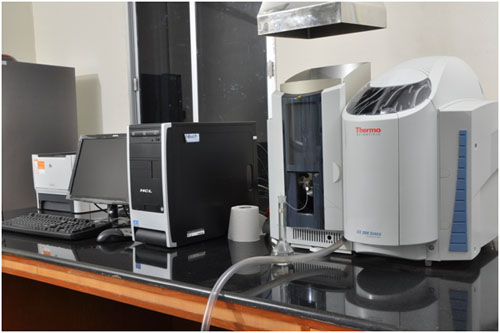
Atomic Absorption Spectroscopy (AAS) at NCIF
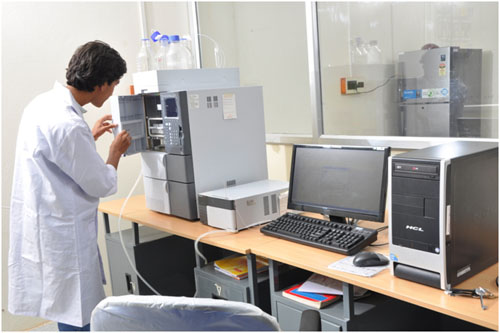
High Performance Liquid Chromatography (HPLC) at NCIF
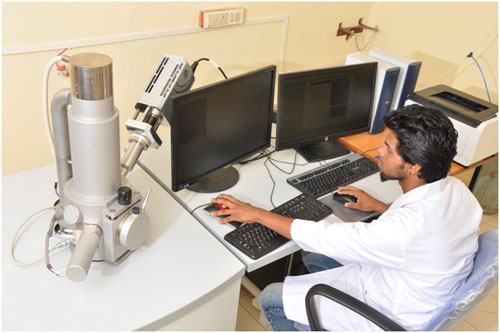
Scanning Electron Microscope (SEM) at NCIF